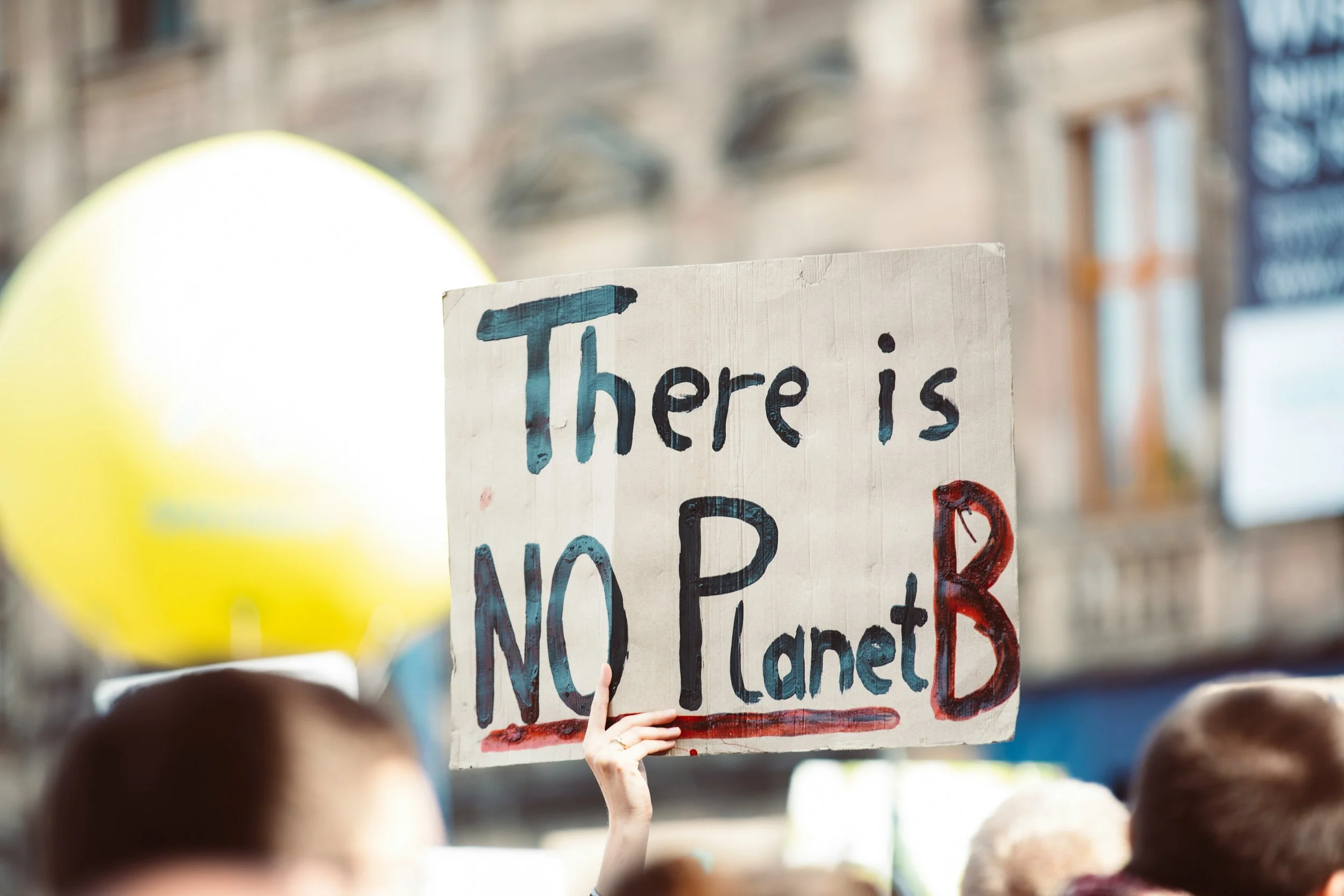
Photo by Markus Spiske on Unsplash
What is climate anxiety?
There are lots of different names for what’s often called climate anxiety. Sometimes it’s also referred to as eco distress, eco anxiety, climate grief, or solastalgia.
Whatever you call it, we’re talking about the fear, grief, or uncertainty we can feel as a result of the climate crisis.
What causes climate anxiety?
I firstly want to say emphatically: feeling distressed about the climate crisis is an entirely rational response.
Seeing a disaster unfolding that is going to affect us all and everyone we share the planet with in ways we can’t yet fully know, while world-leading scientists and experts run out of ways to tell us that it’s increasingly likely to be a catastrophe?
Yes. Distress, worry, or anxiety is a natural and appropriate response to a situation like that.
The experience of climate distress is different for different people, but it often includes:
Anxiety about what the future might look like
Distress at familiar landscapes being changed or lost
Sadness at the loss of wildlife and their habitats
Worry for your children or grandchildren
Anger at the choices that led us to this crisis and the pace of the response
Guilt for the ways we each contribute to the climate crisis
What to do about climate anxiety
For me at least, the goal isn’t to never feel it.
Distress is part of being human and, as we’ve already covered above, is a rational response to the crisis we see unfolding.
If someone had lost a loved one, we wouldn’t (and shouldn’t) try to persuade or distract them out of their distress.
Nor should we here.
Instead, like with any other kind of grief, I believe the goal should be to find ways to live alongside it while not being overwhelmed by it.
With that in mind, here are 8 ways you can honour your feelings while not becoming consumed by them (with big thanks to Mark Freeston, Professor of Clinical Psychology at Newcastle University, who outlined many of these ideas at a recent talk I attended).
8 ways to manage climate anxiety
If you’re anything like me, you’ll have landed on this blog hoping to discover ‘the thing you haven’t tried yet’.
While the chances are you’ll have seen these suggestions before: my friend, this is because these are the things that work. These are backed by the research.
If short-term thinking, extraction, and individualism is what got us here, it makes sense that the solutions would be the opposite, right?
So here we go.
Connect and take action
1. Prioritise activities that include community
We’re just creatures of the earth too, and we thrive most in community.
I can’t think of a crisis that’s best tackled alone, and climate change certainly isn’t one of them.
2. Be selective in where you invest your time and energy
Focus on activities that most align with your skills and values. No one can do it all, and trying to is what leads to burnout.
And speaking of burnout…
3. Take time out
Let’s take our cue from nature, shall we? Seasons, rhythms, balance.
Your creaturely self also needs rest. Life on earth needs defending but also needs to feel worth living. Give yourself the regular time and space to top yourself back up.
Getting perspective on the challenge
4. Quit the doom scroll
It’s a difficult balance to stay informed without getting overwhelmed.
News reports and social media give us a steady stream of largely negative climate stories (both of disasters unfolding and political inaction).
While I’m not suggesting we close our ears to those altogether, I am suggesting that we also give space to stories of progress and communities making change - they are just as true.
Try Daily Climate good news, Positive News, and the Outrage + Optimism podcast, among many others.
5. Practice self-compassion
We know that adapting practically and emotionally to the climate crisis will always be a work in progress. There isn’t an end point beyond which we can consider it history.
However the future looks, wherever we land between the best and worst case scenarios, this is something we’ll always need to work at and adapt to. So go gently with yourself, this is a long haul.
Top yourself up
6. Spend time with people and places that are important to you.
One of the worst things about climate distress is that it can make you feel so alone. Find people you can share with, who understand how you feel and will take action with you.
Make sure that you also spend time with people just for the joy of it. There will be people in your life who cheer you and build you up, even if they don’t share your views on the climate crisis.
7. Invest in your creativity
Express yourself through writing, art, dancing, music, spiritual practice. Whatever it is that you enjoy, make space for that.
Anything that tops you up and makes you feel like you is time well spent.
8. Find your words of wisdom
As a final thought: I’ve found that it can help to have a quote or two that speak to you, that you can draw on when you want to ground yourself.
One that I find very clarifying, and which I return to on the days when I need to hear it, is a line from Wild Dark Shore by Charlotte McConaghy. She acknowledges the fears of what our unknown future may hold, of whether it’ll look like the worst of our imaginings. Then she offers a choice:
“But until then, we get to choose if we’ll add to that destruction or if we will care for each other.”
Whatever the distress I’m feeling, it helps me to recentre on that simple choice before me.
More useful resources
To add to those mentioned above, here are a few more:
The Climate Psychology Alliance - resources, events, and training
‘Active Hope’ by Joanna Macy and Chris Johnstone
‘A Field Guide to Climate Anxiety – How to Keep Your Cool on a Warming Planet’ by Sarah Jaquette Ray
Active Hope training - free online course
‘I Eat The Stars: how to live fully and beautifully in a collapsing world’ by Sarah Wilson
‘For the weary soul’ - another blog post from me
Are you a climate worker or activist?
If you’re a scientist, educator, writer, environmentalist, or activist - whatever form your work takes, I’d love to work with you.
Part of my climate activism is supporting you in yours, so please get in touch if you’d like counselling with a therapist who gets it.