The breadcrumbs our bodies leave for us
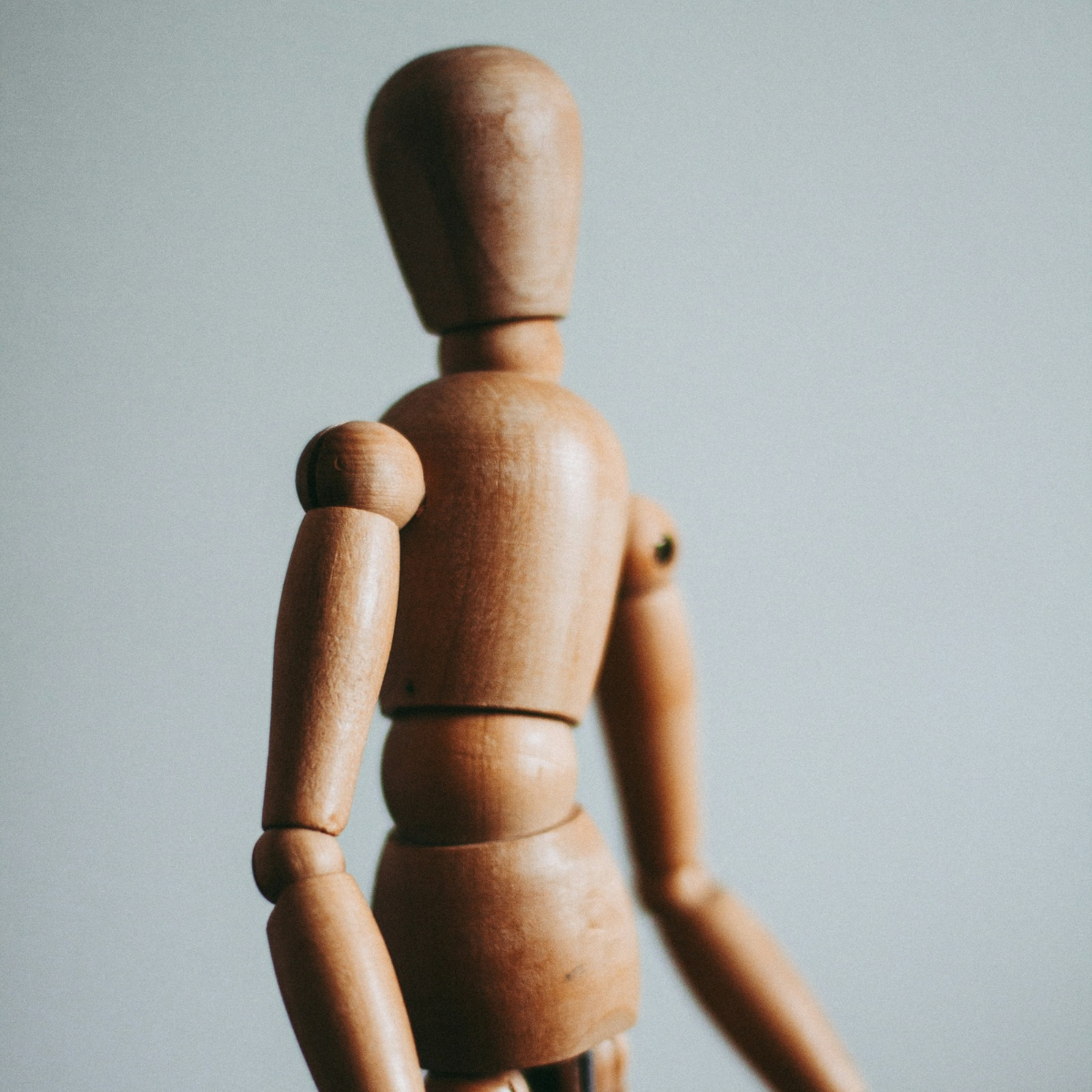
Photo by Kira auf der Heide on Unsplash
Your body might know you’re at a crossroads before you do.
There are all kinds of reasons that it might be difficult to notice when a change is needed.
Pressure at work doesn’t give you a second to think between Zoom calls, Teams messages, patient appointments, or project deadlines.
Caring responsibilities - for a child, a parent, a partner - puts them squarely at the centre of your focus, nudging everything else into your peripheral vision.
You’re the one who holds everything together at home, so it’s just a case of getting everyone through each day.
Meeting other people’s expectations is something you’ve done for so long that it’s hard to imagine how life could look different (or how to get there).
Whatever the case for you, the practical matters of life and the laser focus of stress can leave little (if any) space to notice how you are - or the opportunity for change that might be offering itself to you.
But it’s my belief that if our struggling goes unthought or unspoken, there’s a good chance it’ll express itself in another way.
It might be migraines. A dodgy tummy. Aches and pains you can’t really explain. Persistent colds that are hard to shake. A lump in your throat. A weight in your chest.
One big soup
Now, the old idea of the ‘mind’ and the ‘body’ being separate things has a lot to answer for here.
A wise therapist I know likes to say: ‘We’re just one big soup’.
We’re each a broth of sensations, memories, hormones, neurons, microbes, ideas, nerve endings, and emotions.
Thinking of the body just as a vehicle to carry our brain around can make us miss (or dismiss) the important nudges our bodies give us.
We’re given bodily signals all the time; we experience the world through our physical senses, which are interpreted by our brain, and then responded to by (yep) our body. Our sensations are signposts.
The body in therapy
In the therapy room, it’s always (always) useful to reflect on what’s going on in your body. A good therapist will help you to do this, because your body is such a rich and wise source of information - it might be telling you something you’ve not consciously thought.
If the thought of letting someone down gets your heart pounding, that’s a really helpful thing to notice and reflect on in therapy. Ditto noticing your chest tightening on your way into work. Or the adrenaline rush as you log into your inbox. Or the itchiness you feel before walking into a room full of people.
This is all, as legendary psychiatrist Irvin D. Yalom likes to say: ‘Grist for the mill’.
What’s going on in our bodies is just as valid, real, and therapeutically helpful as the thoughts we think and the emotions we feel.
Three ideas to try
1. Go for a walk, even just for five minutes. If you’re feeling fight-or-flighty, your adrenaline needs somewhere to go. We’re not evolutionarily geared up to just sit still while flooded with stress hormones.
2. Raise your head and look at the furthest horizon or widest vista you can, as often as you can throughout the day. Widening our peripheral vision (i.e. becoming less laser focused) helps to turn off the stress response (see the second link in the list below).
3. If you’re feeling stuck or blocked, get your body moving. This is best done outside, where you can put both of the above into action. Melanie Challenger, author of the first link in the list below, puts it better than I can:
“Sometimes, when I know I’ve spent yet another day indoors at my desk, I get myself outside and walk the road uphill to where I can look at the view across the dale. It is often hard to release my mind. It feels as if, from concentrating all day and neglecting the rest of my body, I have become a clenched fist somewhere inside my skull. Yet once the light and the breeze and the sounds of birds reach me, the grip eases, a sensation of pleasure passes over me, and ideas begin to free up too.”
Explore in more depth
Learning and being fully human by being present in our bodies (and the risk of over-relying on technology): Deskilling the body (Aeon)
The link between stress, our vision, and the benefits of widening our gaze: Horizon gazing and its health benefits (Sensory Trust)
The mind and body connection: Your body matters too (Counselling Directory)
The gut, our microbiome, and beginning to understand its significance to our health: Unlocking the ‘gut’ microbiome (The Guardian)